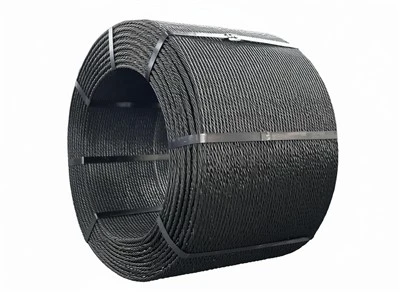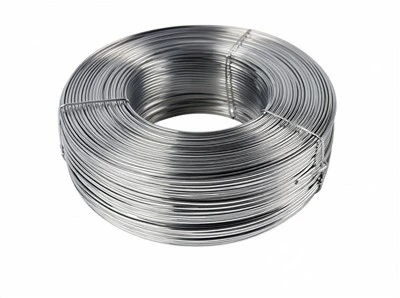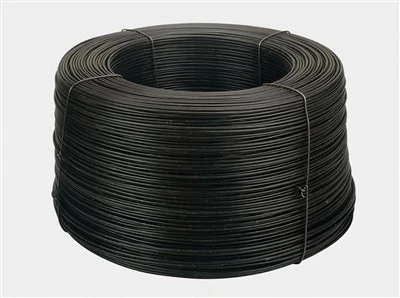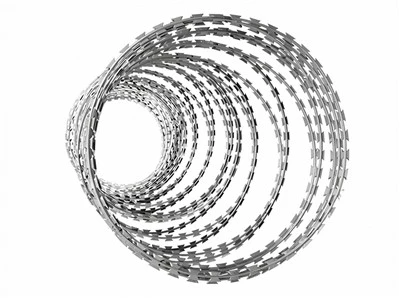

The production of galvanized wire typically begins with high-quality low-carbon steel wire rods. These undergo pickling to remove surface scale and impurities, followed by pretreatment steps such as washing and drying to ensure a clean surface, thereby establishing a solid foundation for subsequent wire drawing and galvanizing. After multiple drawing passes, the wire achieves the required dimensions and possesses excellent mechanical properties.
Depending on performance requirements, annealing may be performed to enhance the wire's toughness and ductility, reduce work hardening, and improve the quality of the subsequent galvanizing process. Galvanizing methods primarily include hot-dip galvanizing and electro-galvanizing. Hot-dip galvanizing involves immersing the wire in molten zinc to form a dense zinc coating, resulting in superior corrosion resistance. Electro-galvanizing utilizes electrochemical principles to deposit a zinc layer, producing a uniform, bright finish suitable for products requiring high surface quality.
Post-processing steps such as cooling, coiling, quality inspection, and packaging are also required. Quality inspections cover parameters such as zinc coating thickness, adhesion, tensile strength, surface quality, and dimensional accuracy to ensure the product meets relevant standards and application requirements. Strict control of process parameters at each production stage not only enhances the galvanized wire's corrosion resistance and service life but also ensures consistent product quality, meeting the needs of sectors such as construction, agriculture, electric power, telecommunications, and metal manufacturing.