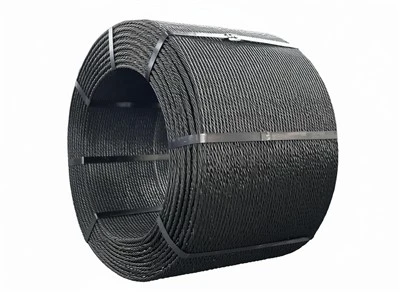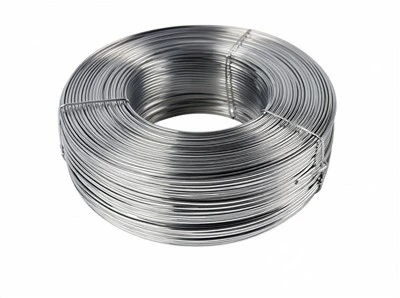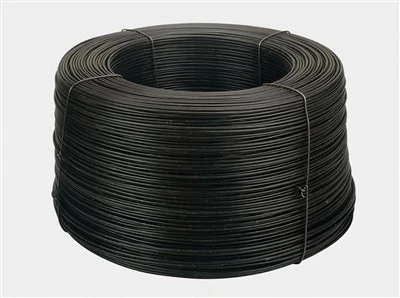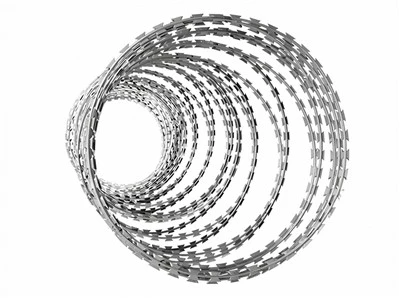

The working principle of galvanized wire relies primarily on the zinc coating protecting the steel wire substrate, thereby enhancing its corrosion resistance and service life. Following the galvanizing process, a uniform and dense zinc layer forms on the surface, preventing direct contact between the steel wire and air, moisture, or other corrosive agents, which slows down the processes of oxidation and rusting. This physical barrier effectively safeguards the steel wire substrate, offering excellent protection in both standard atmospheric and humid environments.
In addition to providing a physical barrier, the zinc coating offers electrochemical protection. Should the coating suffer scratches or localized damage, the zinc-being chemically more reactive than iron-undergoes preferential oxidation in humid environments. This reaction creates a protective layer (such as oxides or basic zinc carbonates) that inhibits corrosive agents from further attacking the steel wire substrate. This mechanism is known as sacrificial anode protection; it ensures that the underlying steel wire remains protected against rust to a certain extent, even if the zinc coating is locally compromised.
The protective performance of galvanized wire depends heavily on factors such as zinc coating thickness, coating uniformity, environmental humidity, and the nature of corrosive agents. Generally, a thicker zinc coating with strong adhesion results in superior corrosion resistance and a longer service life. Consequently, strict control over the galvanizing process and coating quality is essential during production to ensure consistent mechanical properties and effective corrosion resistance, thereby meeting the requirements of sectors such as construction, agriculture, electric power, transportation, and industrial manufacturing.