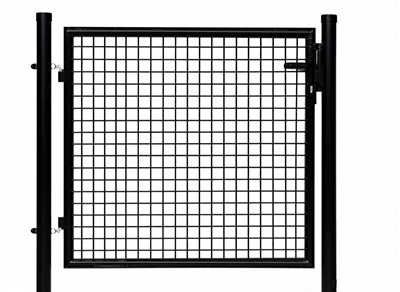

The technical requirements for metal fence gates primarily cover material quality, structural strength, dimensional accuracy, surface treatment, and operational performance. Appropriate metal materials must be selected based on the operating environment and functional needs to ensure the gate possesses sufficient load-bearing capacity and stability. Materials used must meet relevant quality standards and be free from defects-such as significant cracks, deformation, or corrosion-that could impair performance.
Metal fence gates must exhibit robust overall strength and stable connections. Welds or connection points between the gate frame and the gate leaf must be secure and reliable to prevent issues like cracking or loosening during long-term use. Furthermore, dimensions must adhere to design specifications, ensuring proper verticality, flatness, and smooth operation (opening and closing) after installation.
Surface treatment is another critical aspect of quality control. Protective processes-such as hot-dip galvanizing, powder coating, or painting-should be applied according to the specific environment to enhance the product's resistance to rust, corrosion, and aging. The finish must be uniform and intact, free from peeling, flaking, or missed spots, to ensure durability in outdoor settings.
Metal fence gates must also meet requirements for safety and ease of use. Accessories such as locks, hinges, and latches must be securely installed, ensuring smooth and reliable operation. Strict inspections of materials, manufacturing processes, and finished products are essential to ensure the gate is structurally stable, safe to use, and durable.