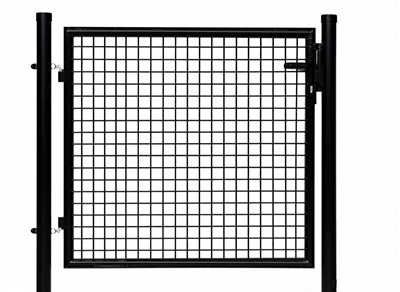

The primary components of metal fence gates include frame connectors, opening mechanisms, locking systems, and auxiliary fixing parts. These components work together to ensure the gate is properly installed and functions reliably. Notably, the connectors linking the gate frame and the gate leaf provide essential support and stability; they must possess sufficient strength and durability to keep the gate secure during long-term use.
Hinges and pivots are critical moving parts that connect the gate leaf to the frame, enabling opening and closing operations. High-quality hinges and pivots offer excellent load-bearing capacity and wear resistance, minimizing wobbling or deformation during use. Furthermore, selecting the appropriate hinge specifications based on the gate's weight and frequency of use ensures smooth operation.
Accessories such as locks, slide bolts, and latches serve to enhance the gate's security. Locks prevent unauthorized entry, while slide bolts and latches reinforce stability when the gate is closed. Depending on the specific application and security requirements, one can choose between standard locking mechanisms and components offering higher levels of protection.
Metal fence gates also incorporate auxiliary components such as fasteners, supports, and protective caps. Fasteners join structural elements to ensure overall stability, while protective caps prevent rainwater from entering steel tubing, thereby reducing the risk of corrosion. The proper selection and installation of these components not only improve the gate's performance but also extend the product's overall service life.