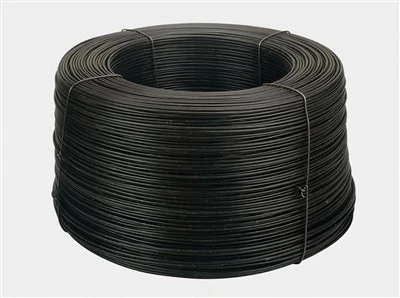

Performance testing for black annealed wire is primarily conducted to assess product quality and operational reliability; it typically encompasses visual inspection, dimensional measurement, and tests for mechanical and processing properties. Visual inspection involves examining the wire surface for smoothness and checking for defects such as significant cracks, rust, or creases to ensure the surface condition meets application requirements. Additionally, the wire diameter and dimensional deviations are measured to ensure consistency in specifications across different production batches.
Mechanical property testing is a critical component of quality control for black annealed wire, covering parameters such as tensile strength, elongation, and bending performance. These tests evaluate the wire's ability to withstand tensile forces and deformation, determining whether it possesses adequate toughness and workability. Properly annealed wire should exhibit good plasticity, resisting breakage during operations like bending or bundling to meet practical usage needs.
Beyond basic performance testing, the production process incorporates sampling inspections and process quality control to ensure consistent product performance. For applications involving specialized environments or high-strength requirements, additional testing protocols may be implemented based on specific customer needs. A comprehensive performance testing regimen effectively guarantees the quality of black annealed wire, enhancing safety and reliability in construction, industrial processing, and everyday use.