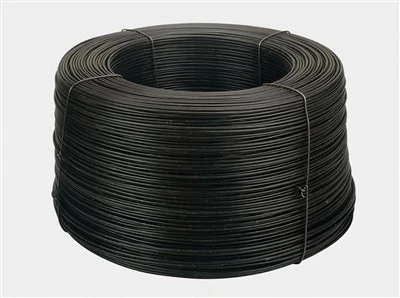

The technical requirements for black annealed wire primarily concern raw material quality, dimensional accuracy, mechanical properties, and surface quality. High-quality low-carbon steel wire rods are typically selected as the raw material; through drawing and annealing processes, the wire achieves the specified diameter and performance standards. During processing, dimensional tolerances must be strictly controlled to ensure product uniformity and meet installation and processing needs across various applications.
Regarding mechanical properties, black annealed wire should exhibit good flexibility, ductility, and appropriate tensile strength. The annealing process improves the wire's internal microstructure and reduces hardness, enabling it to withstand bending and processing without easily fracturing. Furthermore, the tensile strength is controlled based on application requirements to ensure a balance between sufficient operational strength and ease of handling.
In terms of surface quality, the wire should have a uniform appearance and be free from defects-such as significant cracks, rust, or scabs-that could impair its functionality. The wire typically features a black oxide layer on its surface; this is a normal result of the annealing process and serves to protect the surface to some extent. Strict control over production processes and quality inspection ensures consistent performance, allowing the wire to meet the demands of sectors such as construction, manufacturing, and general processing.