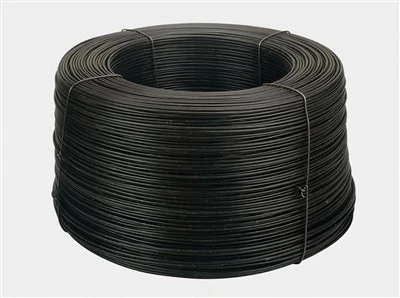

Industry standards for black annealed wire primarily cover product specifications, material properties, surface quality, and inspection methods. Production typically utilizes low-carbon steel wire rods as the primary raw material, processed through techniques such as drawing and annealing; the resulting wire must exhibit stable dimensions and good workability. Depending on the intended use, parameters such as wire diameter, dimensional tolerances, and mechanical properties are controlled to ensure the product meets relevant application standards.
Regarding performance, black annealed wire must possess good flexibility, ductility, and appropriate tensile strength. The annealing process reduces hardness and enhances plasticity, making the wire suitable for applications such as construction binding, bundling, and general processing. Quality inspections typically assess diameter deviation, tensile strength, bending performance, and surface condition to ensure the wire's stability and reliability during use.
Quality control during the production and sale of black annealed wire generally adheres to relevant wire product standards and specific customer technical requirements, though standards may vary by region or industry. Manufacturers must strictly manage raw material selection, production processes, and inspection procedures-taking into account intended use, specifications, and operating environments-to ensure the wire meets quality requirements and satisfies the needs of sectors such as construction and industrial manufacturing.