
The production of galvanized wire begins with high-quality low-carbon steel wire, which undergoes a series of processes including drawing, heat treatment, surface cleaning, and galvanizing. Initially, steel billets are rolled into wire rods, which are then drawn multiple times to achieve the desired diameter. This drawing process enhances the wire's dimensional accuracy and surface quality while simultaneously improving its strength and mechanical properties.
Following the drawing process, the wire undergoes pretreatment steps such as annealing, pickling, and water rinsing. Annealing relieves internal stresses generated during drawing and improves the wire's toughness and ductility. Pickling removes surface scale, rust, and impurities, ensuring a clean metal surface that facilitates optimal adhesion for the subsequent galvanizing stage. After pickling, the wire is thoroughly rinsed and treated with a flux to prevent re-oxidation and to strengthen the bond between the zinc coating and the steel substrate.
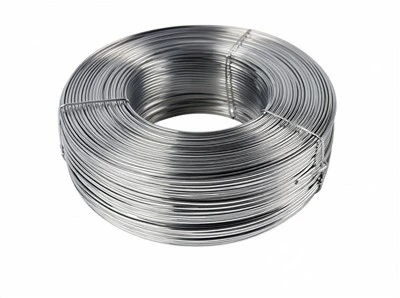
Once pretreatment is complete, the wire proceeds to the galvanizing stage. In the hot-dip galvanizing process, the wire is immersed in molten zinc at approximately 450°C, creating a robust zinc-iron alloy layer and an outer layer of pure zinc, which provides excellent corrosion resistance. Alternatively, the electro-galvanizing process utilizes electrolysis to deposit zinc ions onto the wire surface, resulting in a uniform, smooth coating. Finally, the galvanized wire undergoes cooling, inspection, coiling, and packaging to produce a finished product that meets quality standards, making it suitable for widespread use in sectors such as construction, agriculture, electric power, transportation, and metal manufacturing.