
The evolution of coated wire is closely linked to advancements in metal wire processing technology. Early wire products consisted primarily of basic metal materials-such as ordinary steel or iron wire-used for simple tasks like bundling, connecting, and securing. As industrial production and the construction sector expanded, demands for greater corrosion resistance, durability, and aesthetic appeal grew; the limitations of traditional metal wire in certain environments became apparent, thereby driving the development of coating technologies.
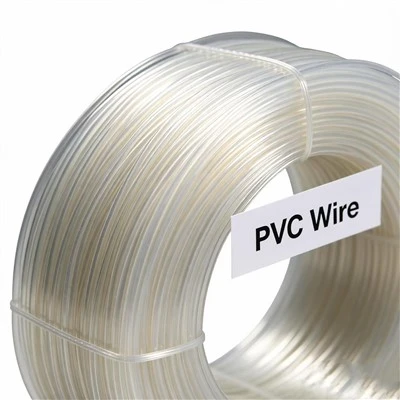
With the maturation of plastics processing technology, the practice of applying protective layers to wire surfaces gained traction. By encasing a metal core in polymer materials such as PVC or PE, the wire retained its original strength and toughness while acquiring superior rust resistance, moisture protection, insulation, and weatherability. During this period, coated wire found widespread application in gardening, construction, agriculture, and consumer goods, leading to an increasingly diverse product range.
In the era of modern industrial development, production processes for coated wire have been continuously optimized. The adoption of automated equipment and precision control technologies has significantly improved dimensional accuracy, coating uniformity, and quality consistency. Simultaneously, rising market demand for eco-friendly, durable, and functional products has spurred the development of coating materials that offer superior environmental safety, wear resistance, and high-performance characteristics.
Today, coated wire has established itself as a versatile, functional product with a wide range of applications. Driven by ongoing advancements in materials science and manufacturing techniques, coated wire will continue to evolve in terms of material performance, production efficiency, and application scope, providing increasingly reliable solutions for sectors such as construction, industrial manufacturing, agricultural infrastructure, and consumer goods.